Making flexible pricing easier to manage
Many suppliers on GetYourGuide relied on manual workarounds to manage seasonal pricing. Some duplicated products, others updated prices manually throughout the year. These workarounds created unnecessary friction and became increasingly difficult to maintain as businesses grew.
Suppliers consistently told us they wanted more flexibility, and the underlying problem was helping users understand and trust pricing logic before it affected live bookings.
Research showed that seasonal pricing was one of the most requested capabilities among suppliers and competitive analysis revealed another pattern: the more powerful pricing tools became, the more difficult they were to understand.
The Design Challenge
The challenge was to introduce pricing flexibility without sacrificing predictability. Suppliers needed more control over seasonal pricing, but any solution also had to remain understandable and trustworthy.
We knew that most suppliers didn't need a highly sophisticated pricing engine from day one, but that the right amount of configurability could really level up suppliers’ pricing. With that in mind, I proposed an interaction model built around an already familiar pattern: if-then rules. This gave us greater confidence that suppliers would adopt the feature during its initial rollout.
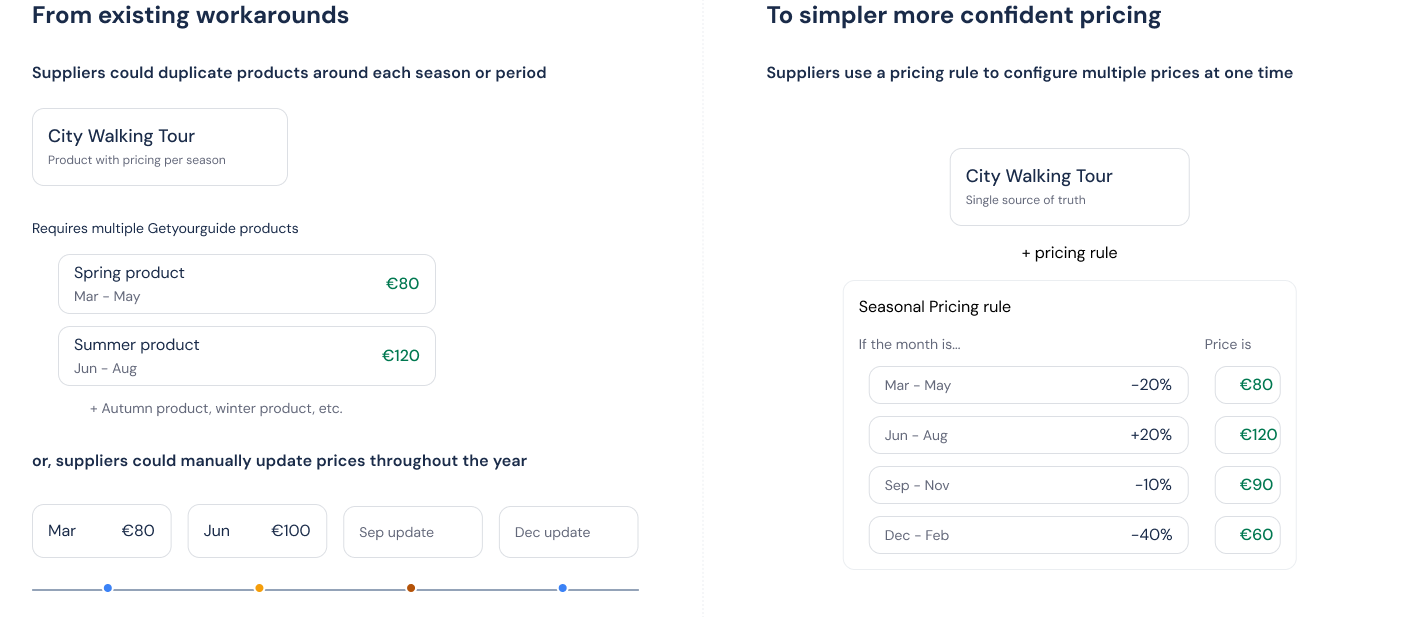
How I made impact
I worked closely with Product and Engineering to define an MVP that supported date-based pricing rules to prioritize the key use case so that we could iterate and learn to support more advanced use cases in the future.
This allowed us to validate whether suppliers could successfully configure and manage pricing logic without becoming overwhelmed by complexity. With that decision made I designed a configuration workflow to create pricing rules as well as touchpoints that supported managing these new rules.
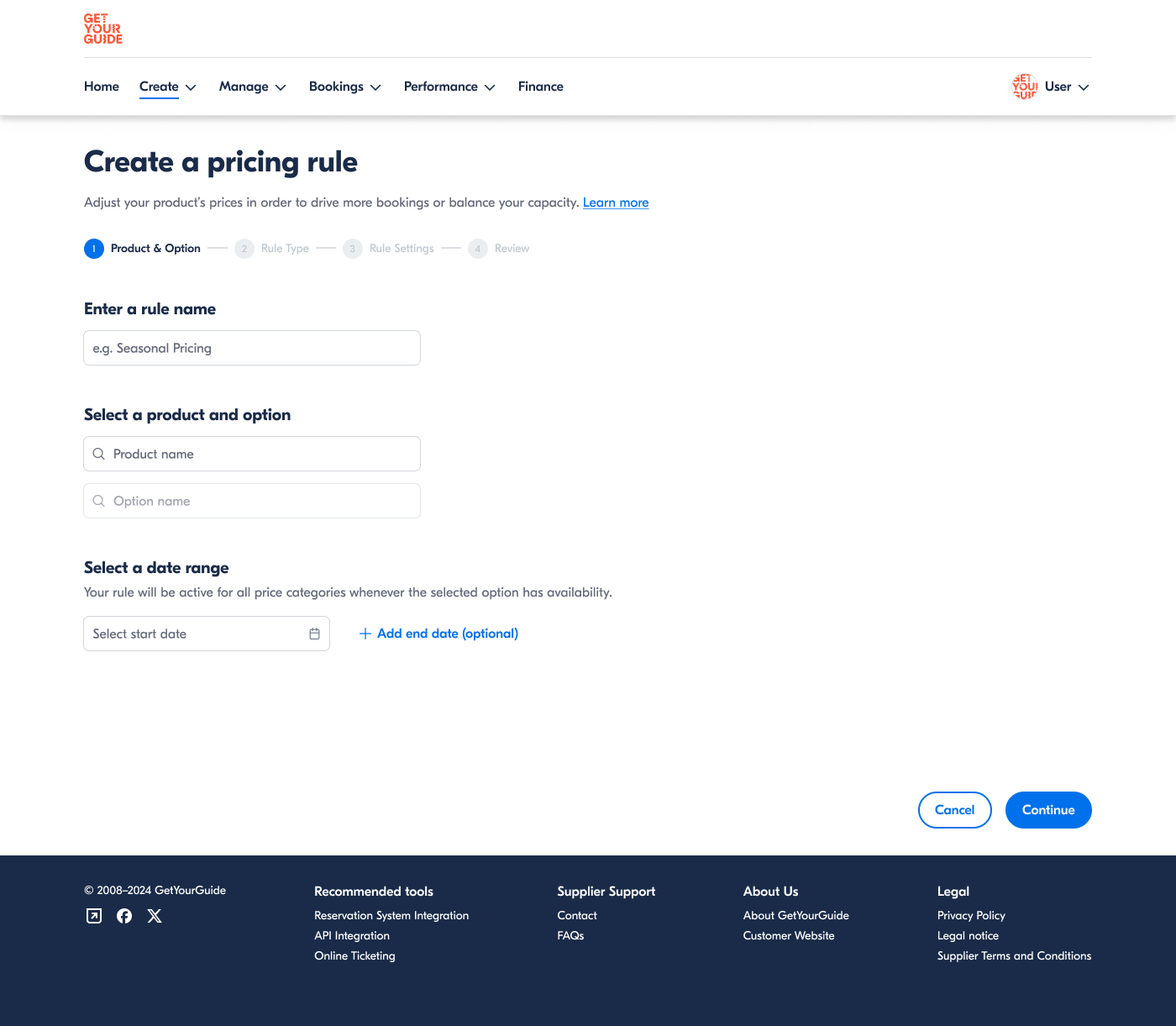
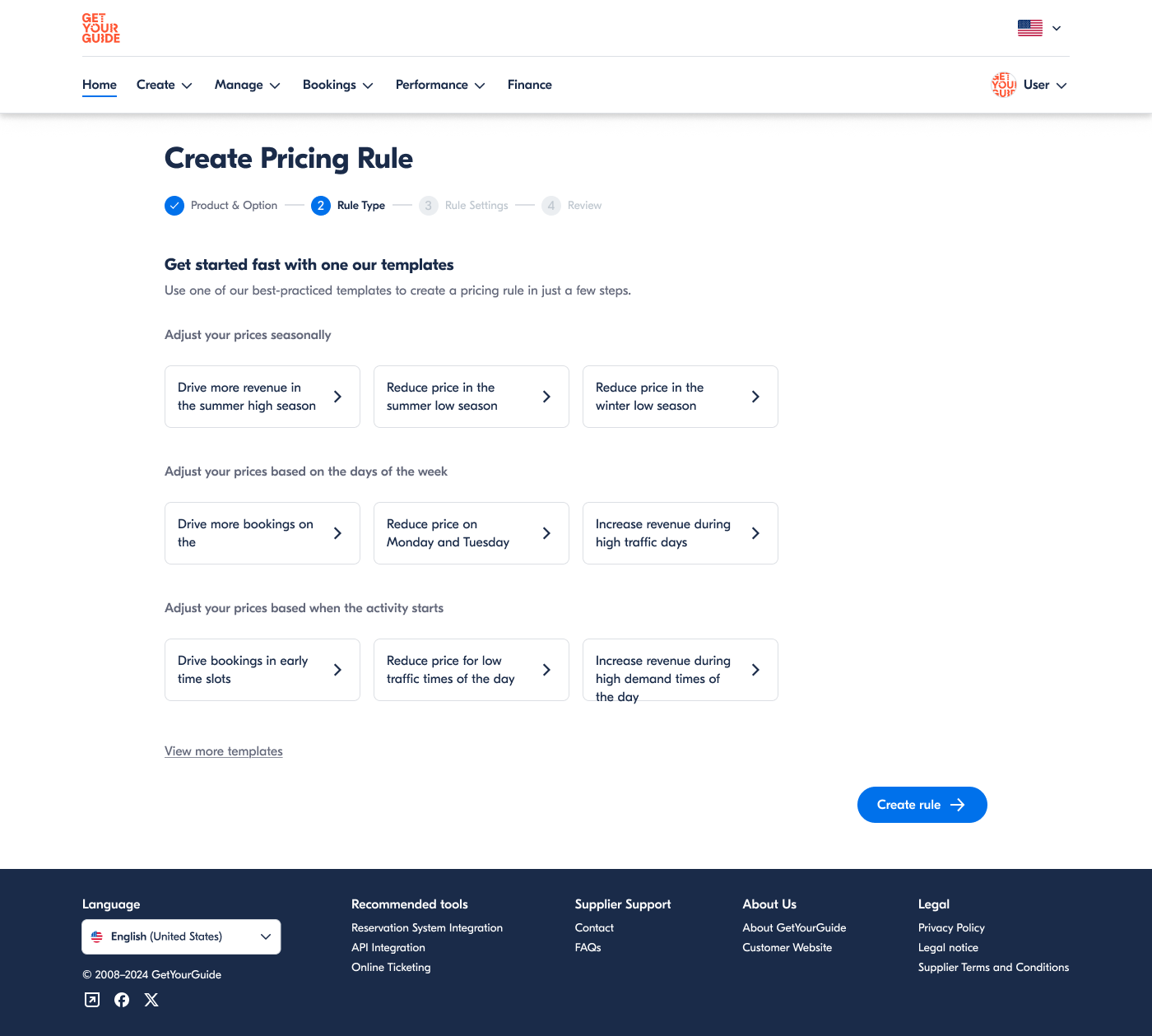
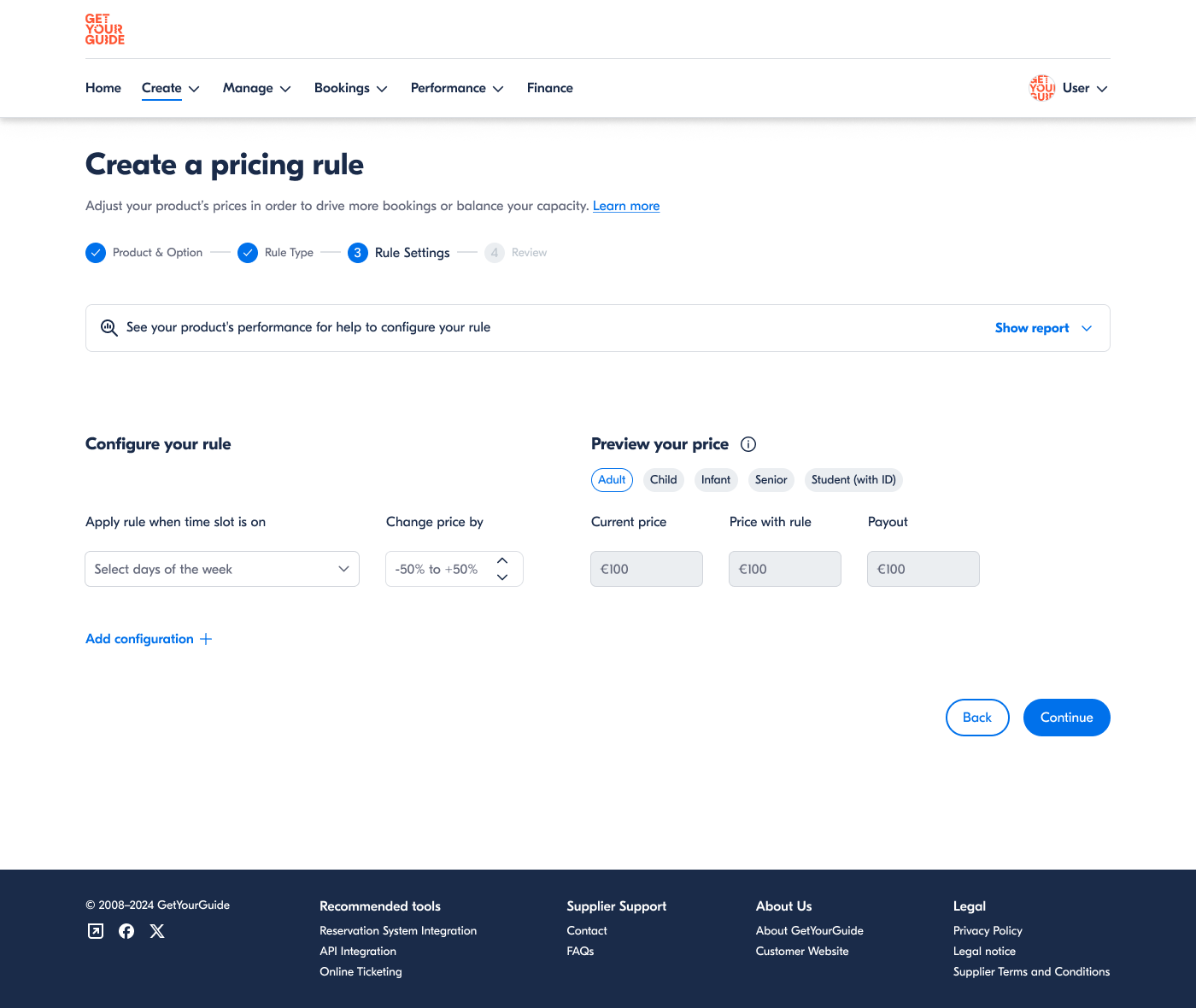
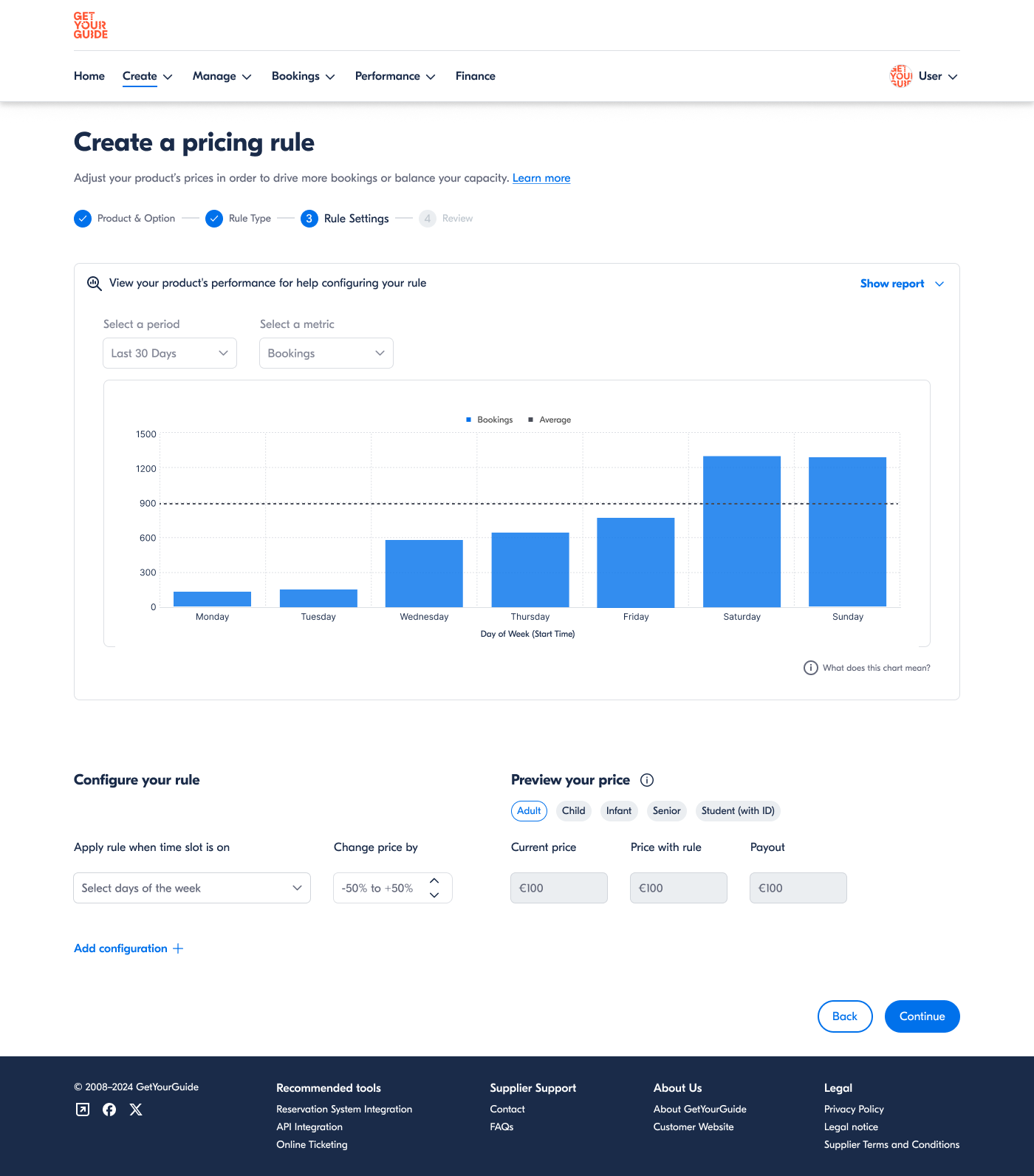
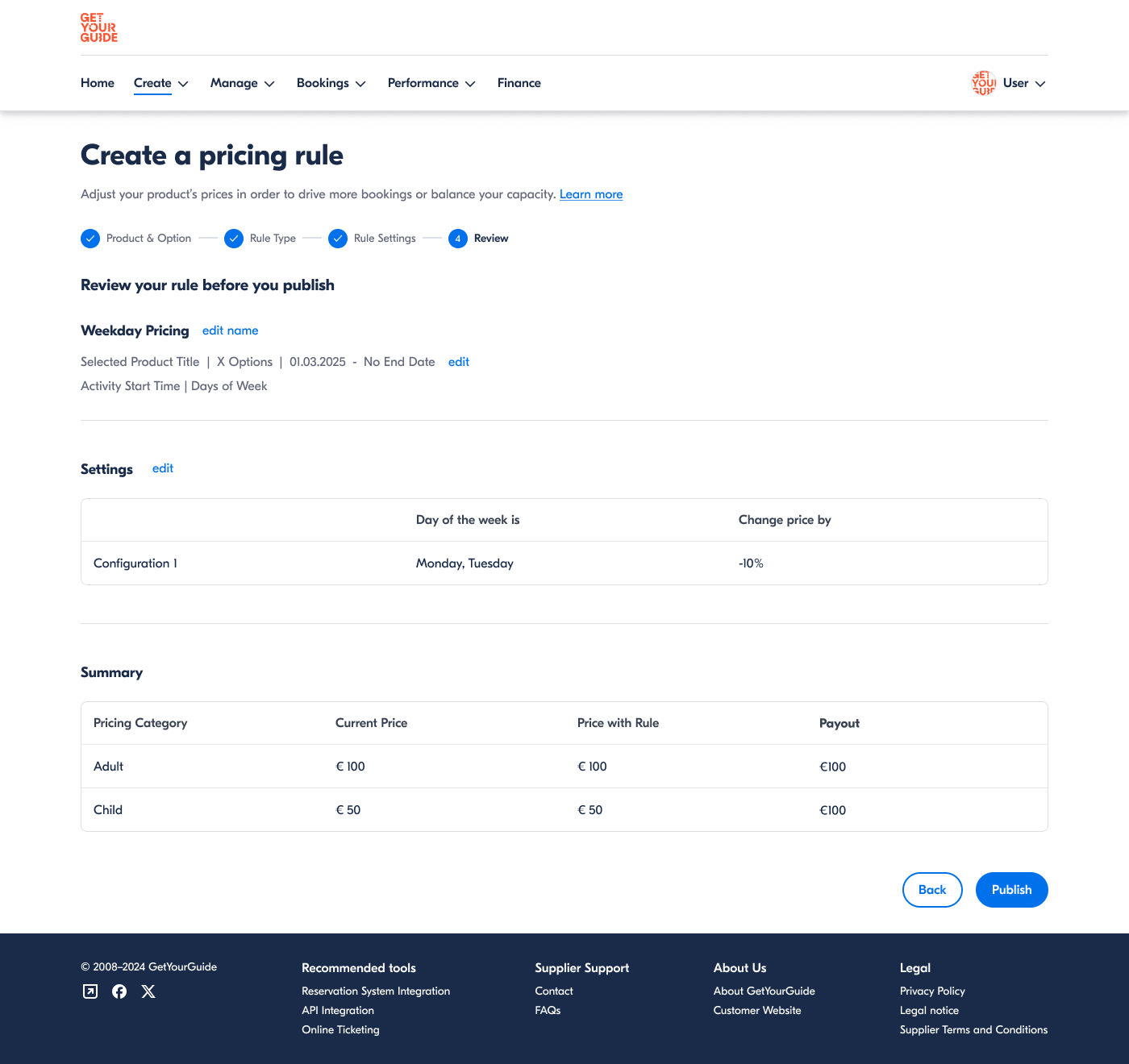
Usability testing revealed an unexpected challenge: Creating rules wasn't particularly difficult, but understanding what the rules were capable of was.
In response, I introduced stronger onboarding guidance, example-driven templates, and performance data that helped suppliers understand the impact of changes before publishing them.
Learnings
The project was deprioritised before launch, but showed me an important lesson:
Designing a configurable system wasn't about maximising flexibility. The challenge was identifying the right level of flexibility and expressing it through an intuitive interaction model so suppliers could not only create pricing rules easily, but also predict their outcome and act with confidence.