Improving trust through consistent communication
As the GetYourGuide product grew, supplier communications evolved independently across product teams. Different notifications used different layouts, interaction patterns, and calls to action, creating an increasingly fragmented experience.
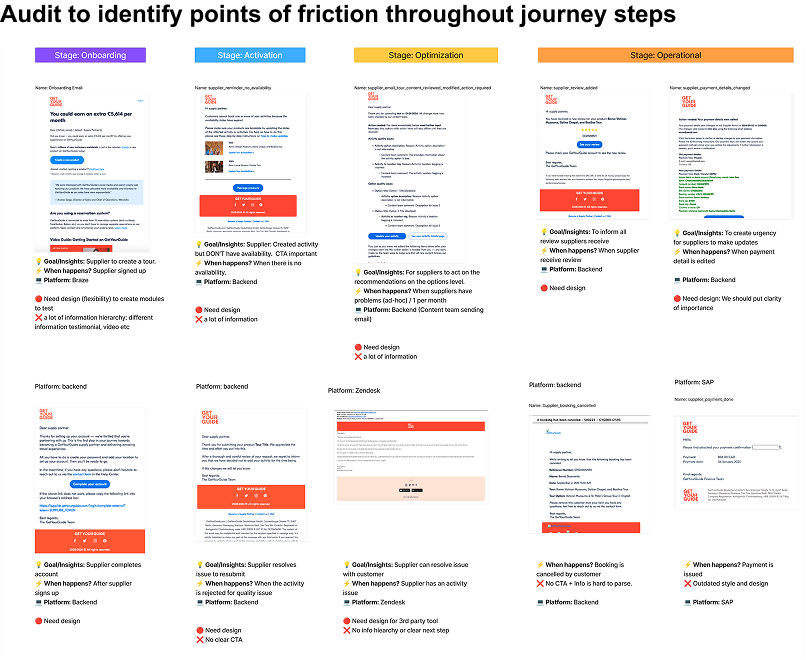
By the time we audited the system, suppliers were receiving more than 80 operational emails built across 12+ separate template patterns and multiple systems. The core issue wasn't just visual inconsistency, but a lack of trust.
Suppliers relied on these communications to manage bookings, products, and operational tasks. The experience often felt disconnected from the product, making important actions harder to identify while increasing maintenance overhead for internal teams.
The Design Challenge
Through an audit with CRM Operations, Engineering, and Content Design, I found that teams had optimized communications for their individual workflows, while suppliers experienced them as a single actor across their entire journey. This insight highlighted that the challenge was to create a unified way of communicating with suppliers in these moments.
How I made impact
Rather than designing another set of templates, I proposed a shared communication framework built around reusable components and common interaction patterns. The system standardized structure, hierarchy, accessibility, and responsive behavior while allowing messaging to evolve independently.
The result was a scalable foundation that reduced 12+ template patterns to one core structure, shortened creation and QA time by roughly 30%, and was adopted across more than 10 product teams.
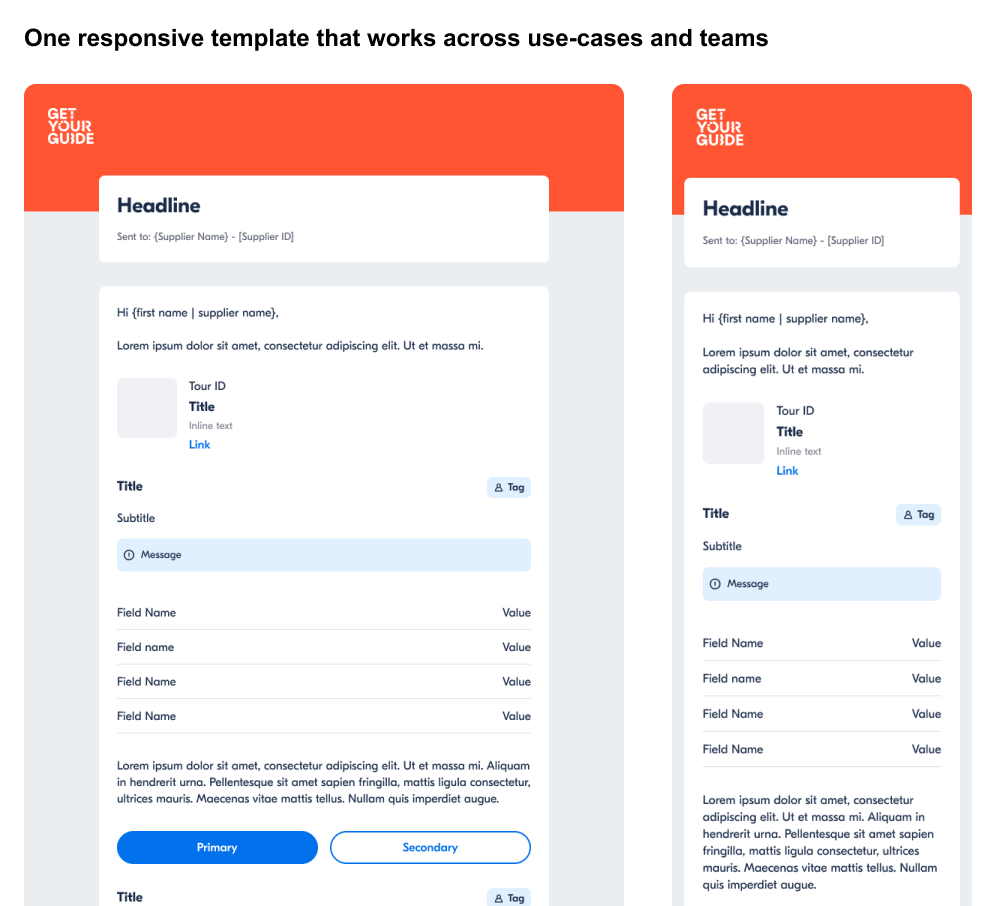
Responsive template
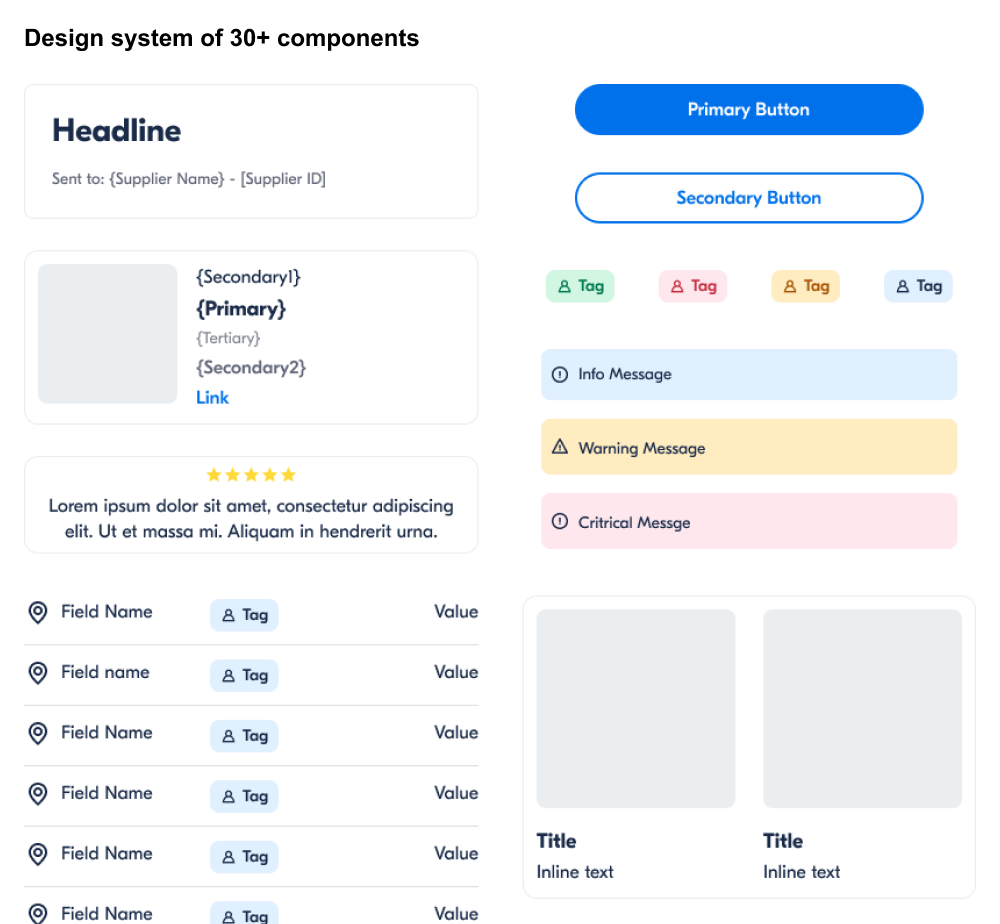
Design system
Learnings
The most interesting lesson wasn't about communications design. It was about systems design. Solving the design problem was relatively straightforward. Creating a solution that multiple teams could adopt and maintain was the harder challenge.